
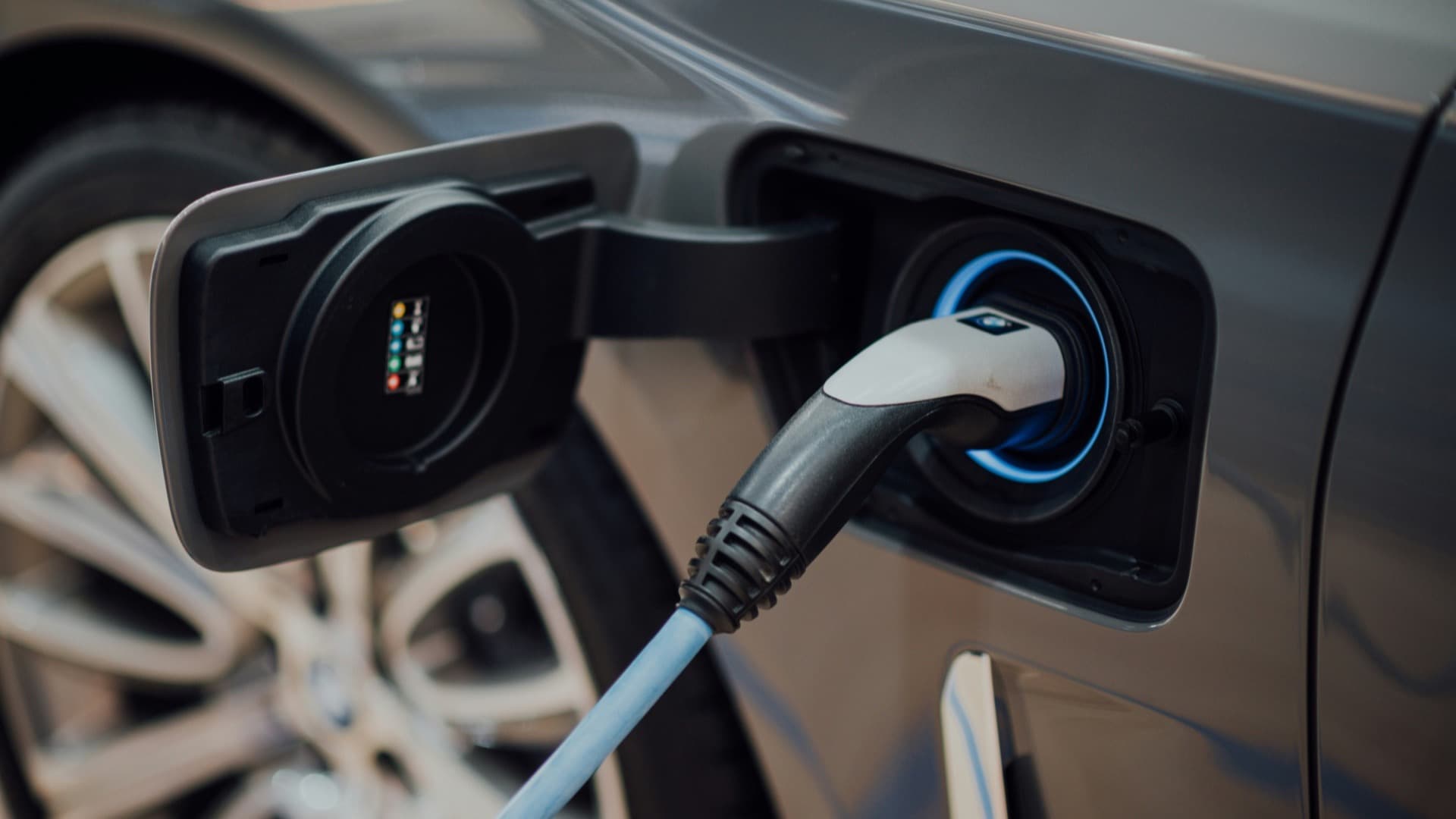
There's a small, particular kind of dread that comes with pulling into an unfamiliar charging station in Germany. The stall is free, the cable reaches, the car starts drawing power — and you still have no idea what this is going to cost. One station is €0,39 per kWh. The next is €0,79. And the number that matters most — the ad-hoc price, the one you pay without an operator app or a monthly contract — is often the hardest one to find until the session is already running.
That gap between "I'm charging" and "I know what charging costs" is the thing we wanted to close. So we built a second app to do exactly one job: show you the live per-kWh price at every charging station in Germany, on a map, before you plug in. It's called Fernweh Charge, and this is the story of where its numbers come from — and why price transparency deserves its own app.
The prices were always public — they were just hard to see
Here's the part most drivers don't know: in Germany, charging-point operators are required to publish their prices.
European rules — the Alternative Fuels Infrastructure Regulation, or AFIR — require charging-point operators to publish their data, prices included, in a standard machine-readable form: DATEX II. In Germany that data lands on the Mobilithek, the federal open-data portal. It's published under a CC0 1.0 licence, which is about as open as data gets: anyone can use it, for anything, without asking.
So the prices exist. They're public. They're standardised. What was missing was a way to actually look at them the way a driver thinks — not as a pile of operator filings, but as pins on a map you can compare at a glance.
That's all Fernweh Charge does. It aggregates the open data from the Mobilithek and puts it on a map, so you can see what a station charges before you commit to it.
What you actually see
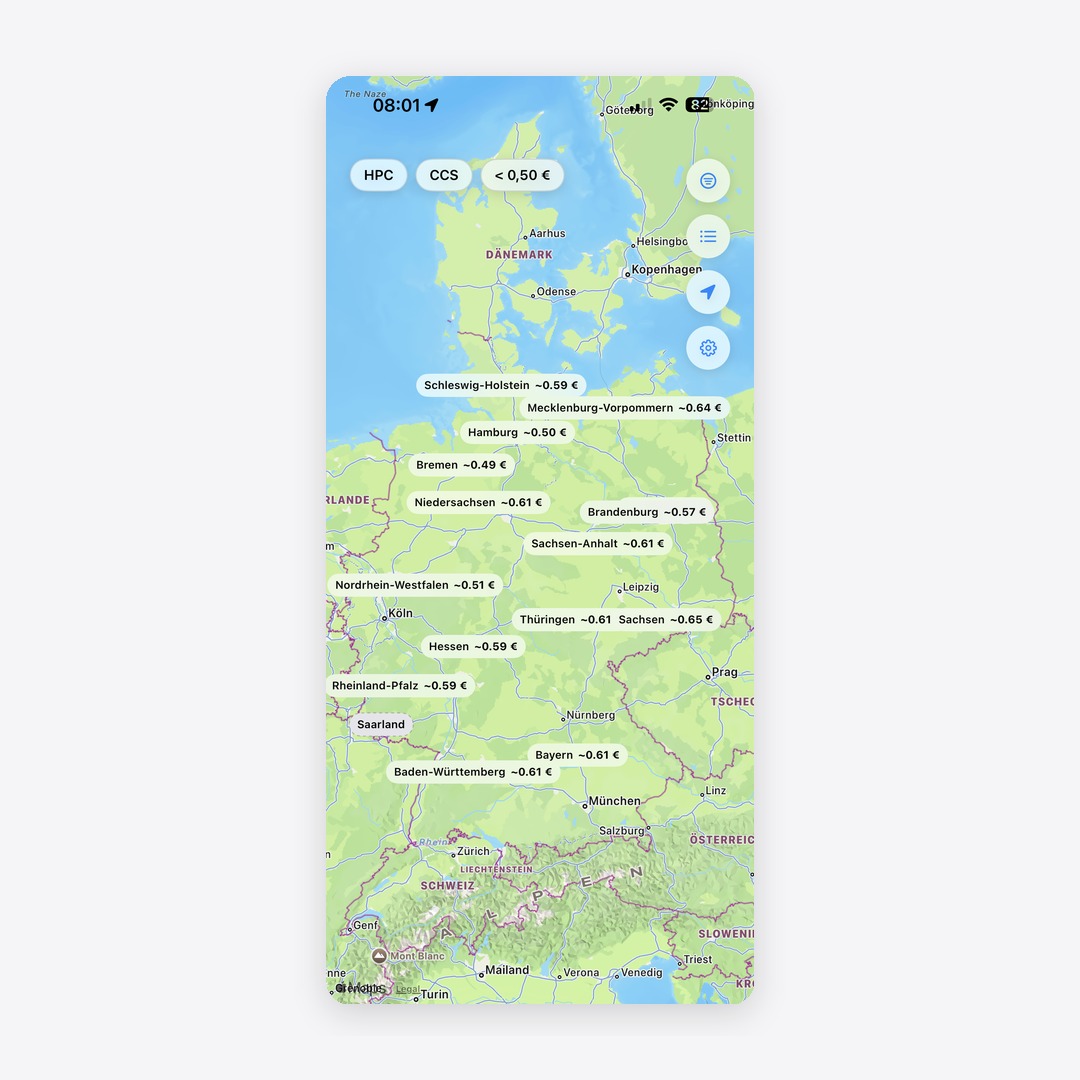
Open the app and you get Germany, covered in price pins — zoomed out, each federal state carries its average ad-hoc €/kWh, so you can read the lay of the land before you commit to anything.
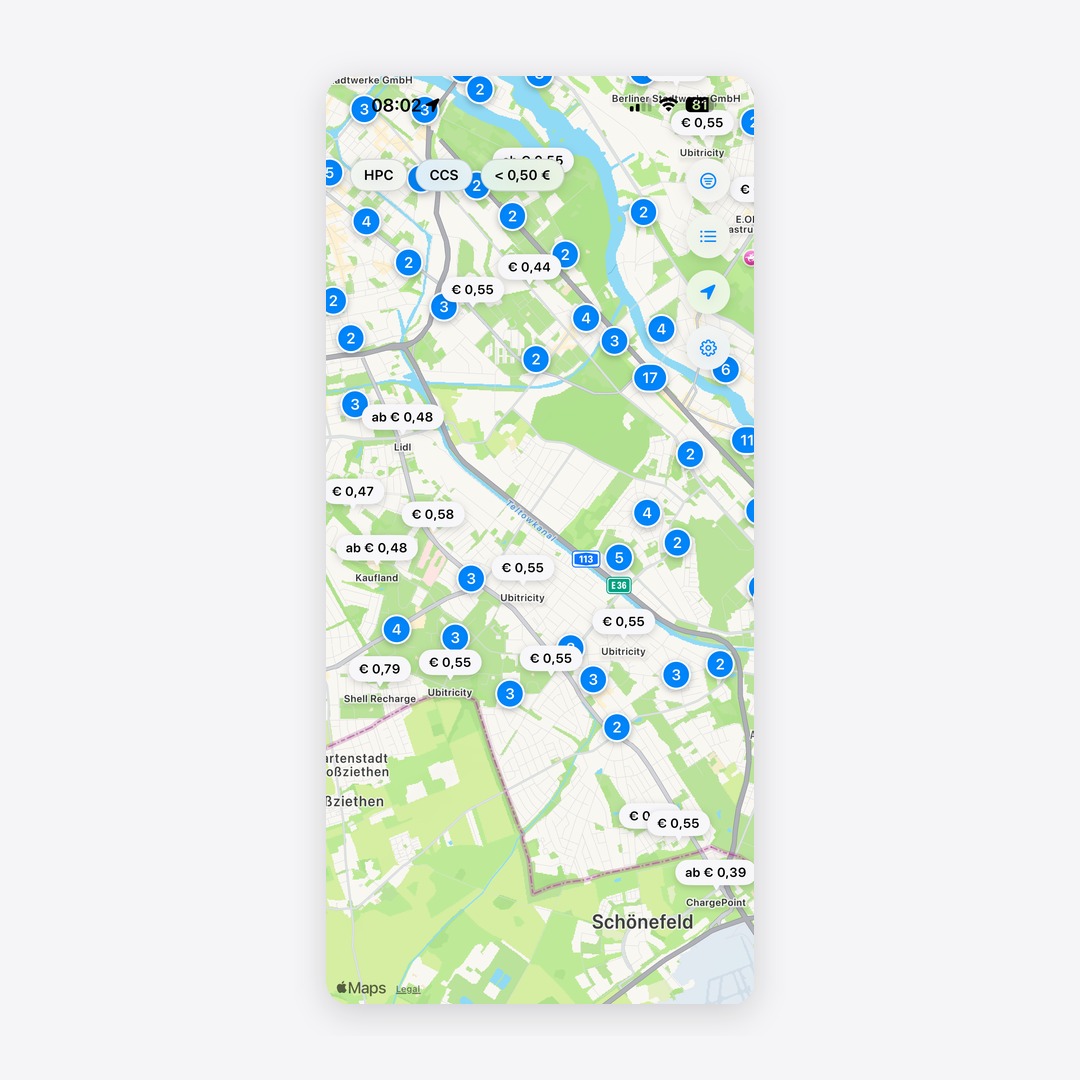
Zoom in and the clusters break apart into individual stations, each pin wearing its price. Tap one and you get the detail that matters:
- the ad-hoc per-kWh price — the one you pay without any operator app or contract
- a per-connector breakdown, because a station's CCS2 stall and its Type 2 stall don't always cost the same (CHAdeMO too, where it exists)
- the maximum power each connector delivers
- the address and the number of charge points
- and, when an operator publishes them, contract-tier prices as well — the "with the EnBW app · €0,49/kWh" kind of number — so you can see what a plan would save you
When you've decided, Fernweh Charge hands you off to your usual navigation app to actually drive there.
Ad-hoc vs contract — and why the difference matters
Most of the price confusion in German charging comes down to one distinction: the ad-hoc price (plug in, tap to pay, no relationship with the operator) versus the contract price (you're on that operator's plan, or a roaming provider's). The ad-hoc price is almost always higher — it's the convenience tariff. For an occasional charge far from home, ad-hoc is exactly what you'll pay, and it's the number you most need to see in advance. Fernweh Charge leads with it, and shows the contract tier alongside when the operator publishes one, so the trade-off is visible rather than buried.
Filtering down to the charge you want
A map of every station is a lot of stations. So the filters are the point. You can narrow to:
- a minimum charging power (no point showing an 11 kW stall when you need 150)
- a maximum €/kWh price — set your ceiling, and everything above it disappears
- a connector type
- a specific operator, with an inline search inside the filter sheet, so you don't have to scroll a list
Set the filters once and the map becomes a shortlist: fast enough, cheap enough, the right plug.
Where the coverage stands
Fernweh Charge currently shows live prices for 17+ charging-point operators across Germany — including EnBW, Allego, Aral pulse, the chargecloud-operated networks (EWE Go, Maingau Energie, ESWE, NewMotion / Shell Recharge, Vattenfall, and others), Ionity, Compleo, eRound, LichtBlick, Wirelane, and Tesla. Every operator that publishes ad-hoc prices to the Mobilithek shows up. Prices refresh daily, and there's a refresh button in the About sheet if you want to pull the latest data on demand.
No account, because there's nothing to log in to
This is a free app that asks nothing of you. No account, no sign-in, no analytics, no tracking. Your location is used only to centre the map on where you are — nothing leaves your device. The open-data attribution (the Bundesanstalt für Straßenwesen and the Mobilithek) is surfaced right in the app, because the whole thing is built on public data and we'd rather say so plainly.
A sibling to the road-trip planner
If you found your way here from the Fernweh blog, you already know our other app — Fernweh, the road-trip planner that maps multi-stop trips with charging in mind. Fernweh Charge came out of the same place: the conviction that the boring, logistical parts of driving electric — the cost, the timing, the where-do-I-stop — deserve tools that are honest and quiet about it.
Plan the trip in Fernweh. Check the price in Fernweh Charge. Then go drive.