
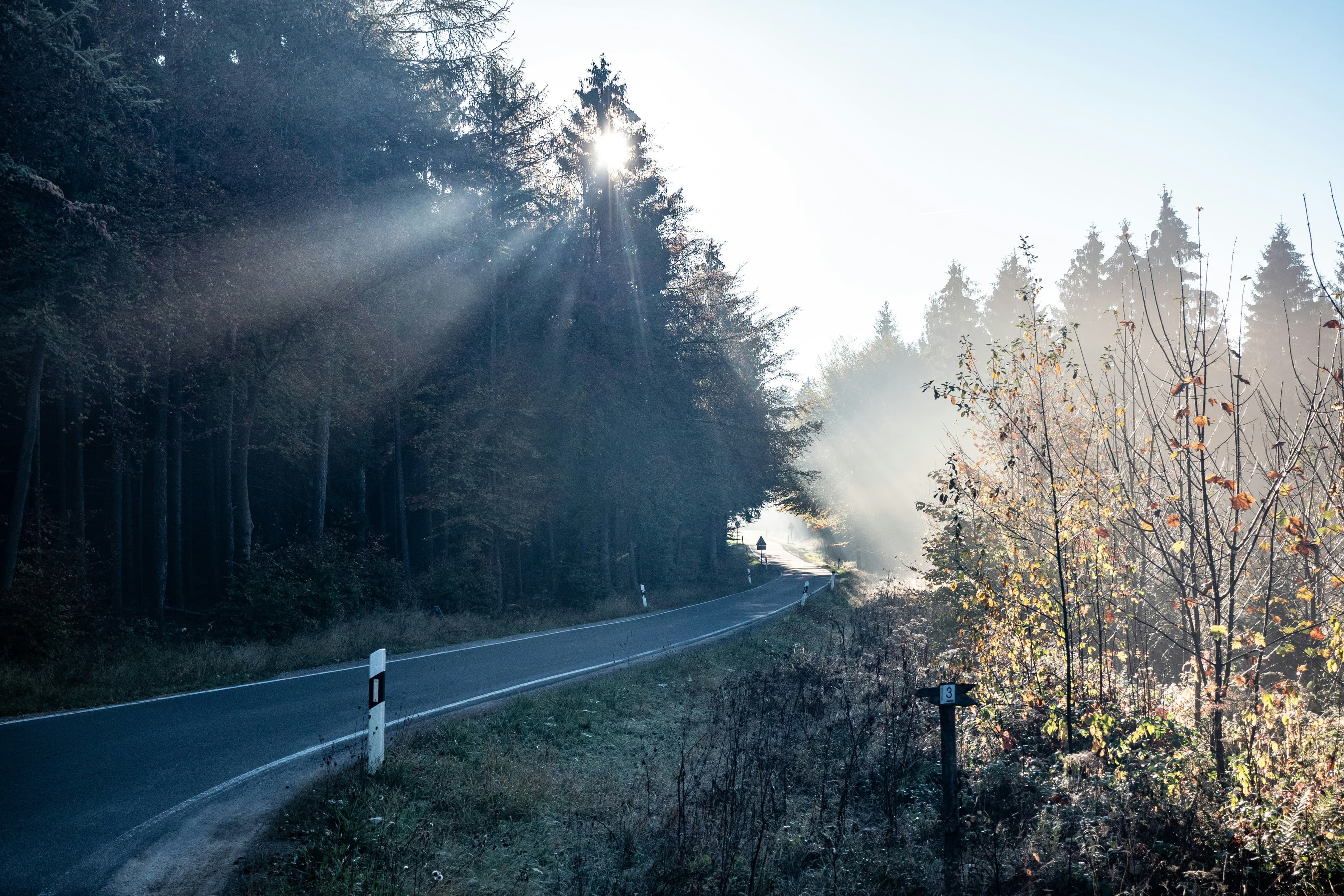
EV road trips in Germany: charging, costs, and routes
Germany is one of the easiest countries in Europe to road-trip in an electric car. The fast-charging network is dense, the prices are published by law so you can actually compare them, and the driving — Black Forest ridges, Alpine passes, the Romantic Road — is some of the best on the continent.
This is the practical version. Each section answers one question, so you can skip to the one you came for.
How do you plan an EV road trip in Germany?
Plan the charging around the route, lean on the Autobahn fast-chargers between towns, and charge overnight wherever you stay. Germany's charging density means you rarely have to detour far for power — so the planning is less about finding a charger and more about sequencing good stops: a fast-charge where you'd want a coffee, an overnight top-up where you sleep, and a buffer for the fact that Autobahn speeds drain a battery faster than gentler roads.
The order is the same as anywhere — chargers first, sights second — but Germany makes it forgiving. Map the route, drop your charging stops at the towns and rest areas you'd want to break at anyway, and let the scenery fill the gaps. A planner that shows the chargers along the route and times each leg turns this into something you can see rather than something you worry about.
Is Germany a good country for an EV road trip?
Yes — it's one of the best in Europe. Germany has one of the continent's densest fast-charging networks, with operators like EnBW, Ionity, Aral pulse, Allego, and EWE Go covering the Autobahn rest stops and town edges, so long-distance EV driving is genuinely low-stress.
The Autobahn network puts fast chargers at regular intervals along the main corridors, and motorway service areas increasingly have high-power (150 kW and up) chargers. Off the motorway, towns and hotels add slower AC charging that's perfect for overnight stops. The practical upshot: on the main routes you're rarely more than a short hop from a charge, which means you can plan around where you want to stop rather than where you're forced to.
How much does it cost to charge an EV in Germany?
It varies a lot by operator and whether you're paying ad-hoc or on a contract — ad-hoc DC fast-charging often lands somewhere between about €0.40 and €0.90 per kWh. The spread is wide enough that checking the price before you pull in genuinely saves money on a long trip.
Germany is unusually transparent here: charging operators publish their prices under the European AFIR rules, which is why you can compare them at all. If you want the live picture, Fernweh Charge — a separate, free companion app — shows a map of German EV chargers with their current €/kWh price, drawn from that open data, with no account needed. It answers the question you actually have at the charger: what will this one cost me? For the trip itself, the road-trip planner is where you sequence the stops; Fernweh Charge is where you check what each one costs.
Should you charge on the Autobahn or at your hotel?
Do both, on purpose. Use the Autobahn fast-chargers to cover distance during the day, and charge overnight at your hotel or guesthouse so you start each morning full. Overnight AC charging is cheap, slow, and completely hands-off — and it quietly removes the first fast-charge of the next day.
When you're choosing where to stay, a place with a charger is worth a small preference — many German hotels, guesthouses, and campsites now offer it. Save the fast, pricier Autobahn chargers for the middle of the driving day when you need speed, not when you're asleep. Let the two kinds of charging do different jobs and neither one feels like a chore.
How does driving the Autobahn affect your range?
Fast motorway driving drains a battery faster than the official range figures suggest — at 130 km/h and up, expect noticeably less range than the label. Plan for it rather than be surprised by it.
It's simple physics: air resistance climbs steeply with speed, so the same battery takes you less far on a derestricted Autobahn stretch than on a B-road through the hills. The fix isn't to crawl — it's to plan your charging stops around the real range at the speed you'll actually drive, and to keep a 10–15% buffer at each stop. On the flip side, the slower, scenic roads where an EV is most fun — the Black Forest, the Alpine passes — are also where it's most efficient.
What are the best EV road trip routes in Germany?
The standouts are the Black Forest, the Romantic Road, the Rhine Valley, and the Bavarian Alps — all short enough to drive at an EV's pace and dense enough that charging is never far away. Each one rewards an unhurried, charge-and-explore rhythm.
The Black Forest loop along the B500 ridge road is the classic EV-friendly trip — short hops between villages with plenty of overnight hotel charging (we wrote a full Black Forest itinerary here). The Romantic Road strings together walled medieval towns from Würzburg to Füssen at a gentle pace. The Rhine Valley runs castle to castle along the river with frequent town charging. And the Bavarian Alps give you the passes and lakes, with the EV's torque and regenerative braking turning the climbs into a quiet pleasure. None of them is a range stretch — they're all about the stops.
Where Fernweh fits
Fernweh is a road-trip planner built around the trip, with EV charging woven into the planning. As you build a German route, it shows EV charging stations along the way, so you can place your stops where the power is. It estimates per-leg and total distance, duration, and charging cost, so the day's time and money are visible before you leave. The ETAs reflect your actual vehicle, not a generic car. And it keeps one Apple Calendar event per drive leg, updated automatically as the plan changes. It runs on iPhone, iPad, and on CarPlay in the car.
For the charging-price side specifically, Fernweh Charge is the free companion that maps live German €/kWh prices from the AFIR open data. Plan the trip in one; check what each charge costs in the other.
A German EV road trip is one of the gentlest introductions to electric touring there is — dense charging, honest prices, and roads worth slowing down for. Plan the charging once, and the rest is just driving.